 Key Largo Snorkeling Guide
First Time Snorkeling Tips: Key Largo Beginner Guide
The first time snorkeling tips that actually matter are not the ones on the snorkel's hang-tag - they are the small set of decisions and skills that separate people who step off the boat converted into reef people from people who spend 45 minutes fighting a mask. Key Largo is one of the best places in the country to be a beginner: warm shallow water, boats built for first-timers, crews that teach. This guide walks the whole first day - before you book, the gear, the pool practice, the boat, the water, and the honest rules about swimming that decide who gets in at all.
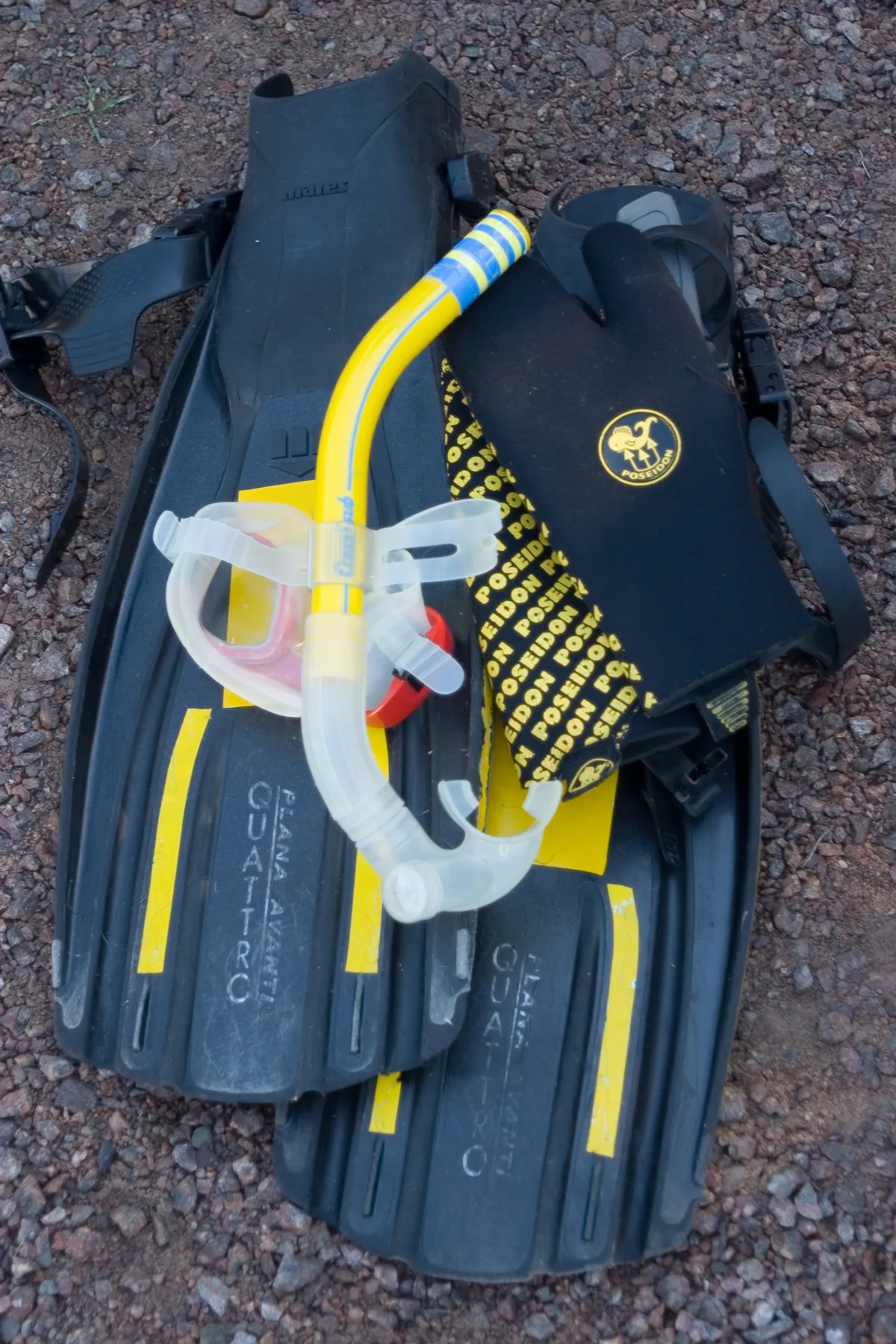
The whole sport fits in four pieces: mask, snorkel, fins, vest - the classic mask is what Key Largo boats issue. Photo: Tomas Hellberg, CC BY 2.0 (Wikimedia Commons).
Quick answer The five things first-timers get wrong, and the Key Largo boat built to fix them
The beginner's day fails in five predictable places: a mask that fits (leaks, fog, misery), breathing panic (the snorkel is a skill, not a tube), no pool practice, the afternoon chop, and sun-plus-motion surprises. Key Largo fixes the rest: warm shallow water, and one boat genuinely built for you - Sundiver, with pre-swim instruction, one calm reef, vests included and rider seats for non-swimmers ($75, 2.5 h). Once the first swim lands, the shallow-reef morning and the two-reef tour with the statue are the natural next steps - all compared in one table. The absolute prerequisite, stated plainly by every operator: you must be able to swim; flotation assists swimmers, it does not replace swimming.
Before You Book: Three Honest Questions
Can you swim? Not 'float' - swim, without assistance, in water too deep to stand in. Every shared Key Largo boat requires it, the listings print it, and the crews enforce it kindly but firmly. If the honest answer is 'sort of,' that is fine - Sundiver sells rider seats, the private charters shape days around tentative swimmers, and a season of pool practice is a good investment regardless. Are you prone to motion sickness? Then the boat choice and the tablet timing matter more than the reef choice - see the boat-day section below. What is your actual goal? A first coral experience points at the calm, teaching formats; the famous statue and the deep reef point at the two-reef tour - worth saving for trip two, and the comparison holds both.
Booking notes for beginners specifically: take the first departure of the day (flattest water, calmest sea state, crew freshest); pick the shallow or teaching formats first; and book early in your stay so the free-cancellation window lets you move a bad-weather day rather than endure it.
Gear: What the Boats Give You and the One Thing to Test
Key Largo's boats include the equipment - this is genuinely a bring-a-swimsuit sport. The standard issue across the comparison's listings: mask, fins, and a snorkel vest (Pirates Cove includes the vest in the fare; the private charter adds wetsuits and noodles). The exceptions are per-listing and printed on their pages: Sundiver omits the snorkel tube (bring or buy ~$15), Silent World supplies sunscreen and snacks; the what-to-bring guide covers the full matrix.
The one piece worth owning and testing is the mask, because fit is face-shaped: press it to your face without the strap, inhale gently through your nose - if it holds itself on, it fits. Full-face masks are banned on every shared boat here (safety design, not snobbery), so a classic separate-snorkel mask is what to buy if you buy; a $20 set that fits beats a $100 set that doesn't. Anti-fog is a real product that works (or baby shampoo smeared and rinsed, the crew trick). Fins boat-side fit is the crew's job - say 'first time' at fitting and they will size generously. Skip the gear-buying rabbit hole entirely on trip one: rental-plus-crew answers everything, and your own kit is what trip two is for. Sanctuary guidance on gear and reef-safe practices is collected on NOAA's Florida Keys pages.
Three Skills to Practise Before the Boat
Breathe through the tube. The whole sport's psychological hump is one fact: you can breathe with your face in the water. Practise in a pool or bathtub - face down, snorkel in mouth, slow breaths, until it is boring. The panic reflex (holding breath, shallow gasps) dies after about five minutes of practice; five hours makes it permanent. Clear the mask. Water in the mask is a when, not an if. The skill: press the top of the mask to your forehead, look up slightly, exhale through your nose - the air pushes the water out the bottom skirt. Practise it once deliberately so it is a move, not a crisis. Float first, kick later. The posture that works is face-down relaxation with hands floating, legs doing a slow flutter from the hip. Frantic bicycle-kicking sprays water into the snorkel and exhausts beginners in minutes; the calm kick goes twice as far on a tenth of the energy.
If there is no pool access before the trip, arrive at the dock 30 minutes early and tell the crew it is your first time: the teaching boat runs the brief for exactly you, and every crew aboard every listing will walk a beginner through all three skills at the platform - that is what they are for.
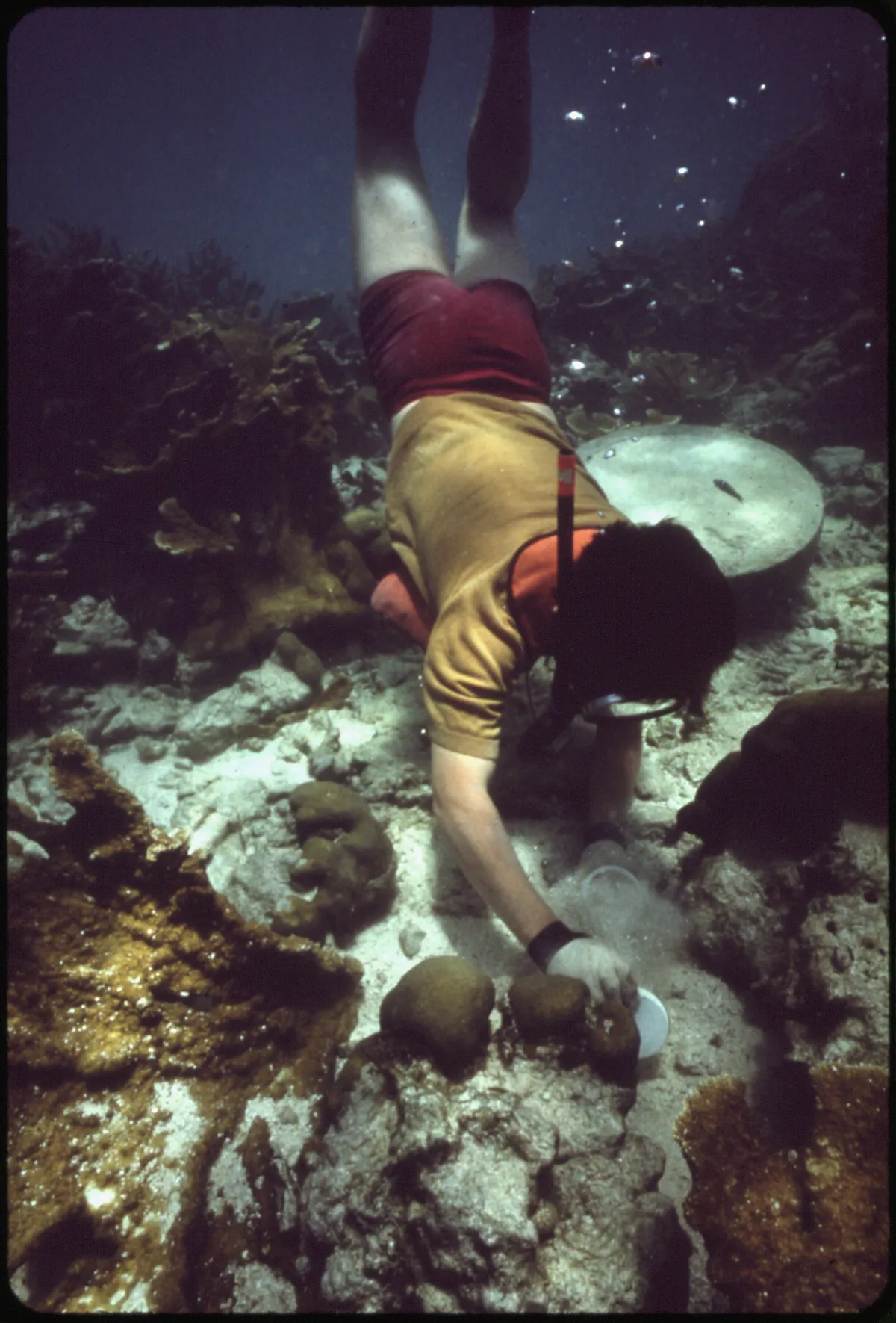
The moment it clicks: face down, slow breath, hands quiet - the reef does the rest.
The Boat Day, Hour by Honest Hour
Morning of: eat something light (empty stomach + diesel fumes = the review section's seasick stories), take the motion tablet 60+ minutes before boarding if you use one, and arrive in swimsuit with the packing list - towel, reef-safe sunscreen, hat, dry shirt, water. At the dock: say 'first time' out loud at check-in; the crew marks you mentally and watches you in the water all day, which is the service you are already paying for. Let them fit the mask and fins - a two-minute adjustment at the dock beats a leaking hour at the reef. The ride out: 20-30 minutes of open water; sit mid-boat, low, look at the horizon, breathe slowly. The brief: the safety talk covers entries, the count, and the no-touch rules - the counting matters, take it seriously. First entry: sit-and-spin or back-roll off the platform per the crew, snorkel in mouth, face down before your brain argues.
In the water: start at the boat, find one fish, follow it - the calm arrives in about 60 seconds for almost everyone. Stay near the group; surface and look up whenever you want the crew's attention. Coming back: one at a time up the ladder, hand on the rail. The ride home is the queasy leg on breezy days - stay low, keep the horizon, and know that the crew has seen worse. Then the freshwater shower at the dock, and the part nobody warns you about: booking the next one.
The Mistakes First-Timers Actually Make
Drawn from the review sections of every listing in the comparison, the recurring first-timer failures are all avoidable. The mask that was never fitted - the top cause of a ruined swim; two minutes at the dock fixes it. Holding breath underwater - snorkels are surface tools; breathe continuously and calmly. The cheap full-face mask bought for the trip - banned on these boats and a known CO2 risk besides; leave it home. Sunscreen in the eyes - apply the forehead last, or wear the hat. No motion tablet until queasy - by then it is too late for the dose to matter. Standing on coral to adjust fins - sanctuary rules and reef health aside, the spiny urchins live there. Touching everything - the no-touch rule is safety (cuts, stings) and law (sanctuary). Skipping the snack - 45 minutes of swimming is real exercise; the boats that feed you (Silent World, Pirates Cove) are not being generous, they are being experienced.
- Fit the mask before the trip; test it on your face, in a shop, in a pool
- Breathe continuously - a snorkel is for breathing, not holding
- Tablet 60+ minutes before boarding, not after the chop starts
- Rash guard or shirt: sun through water burns faster than beach sun
- Hands off the reef, always - cuts and sanctuary law agree
The whole list, as a table to re-read the night before your first boat day:
| Mistake | What it costs | The fix |
|---|---|---|
| Unfitted mask | A leaking, fogging swim | Suction test at the shop; hair out; straps loose |
| Breath-holding | Panic at the first splash | Pool practice: face down, slow breaths, five minutes |
| Full-face mask | Refused at the dock | Classic mask + separate snorkel |
| Late motion tablet | A queasy boat day | 60+ minutes before boarding, light breakfast |
| Sunscreen only at the reef | Burns behind knees and lips | Rash guard, stick, applied before clothes |
| Standing on coral | Injury plus a sanctuary fine | Float; fins up near anything alive |
The Non-Swimmer Rules, Stated Plainly
Because the internet is full of 'anyone can snorkel!' and the Key Largo docks are full of crews who disagree: every shared boat in this comparison requires participants to swim unassisted. The listings phrase it exactly that way - 'able to swim without assistance in water too deep to stand,' as the Silent World listing puts it - and flotation vests and noodles are assist devices for swimmers, not life support for non-swimmers. Sundiver formalises the alternative openly: rider seats for non-swimming family members (ride the boat, see the reef from the deck, pay a rider fee). The private charters will shape a day that keeps a non-swimmer's snorkeler-adjacent family happy - shallow, close-anchored, hand-held - but the water-entry rule holds there too.
The path in is unglamorous and real: swimming lessons first, a season if possible. Snorkeling amplifies whatever swimming base exists; it does not replace it. The kids' guide covers the same logic for children, and the shore warm-up at Pennekamp's Cannon Beach is the honest preview for anyone still on the fence.
Key Largo First-Timer Picks, In Order
Trip one: Sundiver - the teaching format, one reef, instruction-first, $75. Trip two: the shallow-reef morning - calm shallow water with snacks, or the half-day catamaran if a towel and the smallest crowd sound better. Trip three (the one you will plan before you leave Key Largo): the two-reef tour with the Christ of the Abyss statue - the day that turns first-timers into reef people. Whenever your dates land, the best-time windows and the full comparison do the rest.
Reading the Water Once You're In
The first five minutes of a first swim decide the whole relationship with the sport, and they go better with a small decoding manual. The salt will hold you: ocean water carries a beginner higher than any pool, so the first correct move is to do nothing - lie flat, face down, and let the vest and the salt do the floating while your breathing settles. Pick one fish and follow it: the reef organises attention; a single parrotfish's route through the coral teaches the terrain better than any sweep of the whole scene. The sounds are normal: your own breath amplified in the snorkel, the crunch of parrotfish eating coral, the occasional boat engine - hearing your breathing is the sport working, not a problem with the gear. When the chop arrives, the move is counterintuitive: head down, snorkel in, let the swell lift and set you - fighting it is what sends water into the tube. And the cold-news moment: 90 minutes is a long swim; fingers wrinkled and lips chilly means it is time for the boat, a snack, and the second swim nobody regrets skipping.
From First Trip to Reef Person
There is a predictable arc, visible in every Key Largo listing's review sections, and knowing it helps you book the right trip at each stage. Stage one - the touch-the-water trip: instruction-first, shallow, short - Sundiver is purpose-built for it, and the shore warm-up at Cannon Beach belongs here too. Stage two - the confidence swim: a calm-morning shallow-reef format (the shallow morning or the small catamaran), where the snorkeler stops managing the gear and starts watching the reef. Stage three - the headline trip: the two-reef tour with the Christ of the Abyss statue, the deeper water, the turtle odds - the trip people describe as the moment the ocean opened. Stage four - the personalisation: a private charter, a camera in hand, an opinion about which reef is best.
The arc matters for one booking decision: do not buy stage three for a stage-one swimmer - the most common first-timer mistake on the Key Largo docks - and do not keep a stage-three swimmer on the shallow circuit out of caution. Book the stage, not the brochure.
Group Dynamics for a First-Timer Group
Mixed groups - one enthusiast, three first-timers, a non-swimmer - are the normal Key Largo booking, and the failure mode is always the same: the enthusiast's plans drown the group. The fixes are structural. Book the format for the least confident swimmer, and let the enthusiast rent their drama on the next trip - the format-picker in the comparison is built for exactly this negotiation. Assign the buddy pairs before boarding, weakest with strongest, and tell the crew the pairing; the headcounts run better and the nervous swimmer gets a protocol, not a crowd. Put the non-swimmer in a rider seat openly - Sundiver sells them, the private charters plan around them - rather than hoping a vest changes the water. Debrief at lunch, not on the water: the first-timer who heard "you looked great" at the dock goes back in the afternoon; the one who got corrections mid-swim often doesn't.
And the meta-tip the review sections keep proving: the group that books the morning slot together eats lunch as converts. The water does the selling; the schedule just has to get them there calm.
Fog, Leaks and Other Small Disasters, Solved Live
The small gear failures that end first trips all have dock-side fixes, and knowing them converts panic into a pause. The mask that leaks: almost always a fit problem - a strand of hair under the skirt, a strap too tight (overtightening bows the skirt and opens the seal), or the wrong shape for your face. Fix: hair out, straps loosened until the mask holds with a breath, and the alternative mask from the boat's spares if it still weeps. The snorkel that gurgles: water in the bore after a wave or a dive under - exhale sharply through the tube (the blast-clear), or surface, remove, and resume; both are normal moves, not failures. The fog that returns: baby shampoo smear-and-rinse from the crew's bottle, or a pre-treated lens; a mask kept on your face between swims stays clear far longer than one pushed into hair. The fin that's rubbing: tell the crew at the ladder - a size swap takes thirty seconds and saves the blister. The squeeze in your ears on the occasional deeper drift: swallow or pinch-and-blow gently as you descend, and skip the dive if it won't clear - the statue looks fine from the surface.
Every one of these is a thirty-second conversation with a crew member who has solved it a thousand times; the only unsolvable gear problem at Key Largo is the one kept quiet at the platform.
The Budget Answer: What a First Trip Costs
First-timer budgeting, honestly itemised for Key Largo. The seat: $75-81 per person on the shared boats - the beginner formats sit at the bottom of that band (Sundiver $75, the half-day catamaran $75), and nothing about the teaching costs extra. The kit: $0 if you rent - mask, fins and vest are in every fare; the only listing-surcharge is Sundiver's bring-or-buy snorkel (~$15). The extras: motion tablets ($5-8), a rash guard if you lack one ($15-25, doubles as sun protection for the whole trip), and gratuity (15-20%, cash - $12-16 per seat). The shore warm-up at Pennekamp costs the park's vehicle entrance and nothing else.
So a first reef day runs roughly $95-120 per person all-in - and the honest comparison is with the $535-600 private charters, which are a different product for a different day, not a better version of this one. The one place not to economise: the morning slot. A $75 first-departure seat on calm water outperforms any afternoon ticket at any price - the best-time windows are free.
Beginner Questions
Is snorkeling hard for beginners?
No - it is three small skills (breathe through the tube, clear the mask, slow kick) practised in warm, shallow, calm water with a crew watching. The difficulty in Key Largo is almost never the snorkeling; it is the boat ride out (motion sickness) and the sun. Both are packing-list problems, not talent problems.
Can I snorkel if I don't know how to swim?
Not on the shared Key Largo boats - every one requires participants to swim without assistance in water too deep to stand. Non-swimmers can ride along (Sundiver sells rider seats openly), and the honest path in is swimming lessons first, then the shallow-reef formats. Flotation vests assist swimmers; they do not replace the ability.
What are the do's and don'ts when snorkeling?
Do: fit the mask properly, practise before the trip, take the first-morning slot, use the vest, stay near the group, wear a rash guard. Don't: use a full-face mask (banned on these boats), hold your breath, touch coral or wildlife, stand on the reef, or skip the motion tablet if chop bothers you.
How do I stop my mask from fogging?
Two layers: buy or bring anti-fog solution (or use the crew trick - baby shampoo, smear and rinse), and keep the mask on your face or around your neck rather than on your hair, which coats the glass in the oils that cause fog. A properly fitted, pre-treated mask stays clear for a full 45-minute swim.
What not to do when snorkeling for the first time?
The review sections of every Key Largo listing repeat the same short list: don't skip the motion tablet until you're already queasy, don't panic-stand (there's nothing to stand on at the reef), don't fight the waves - head down, let the water move you, and don't test a brand-new full-face mask on a protected reef where it's banned anyway.