 Key Largo Snorkeling Guide
Key Largo Snorkeling With Kids: Ages, Tours and Honest Rules
Key largo snorkeling with kids works - the Keys' shallow, warm reef line is one of the gentlest first-coral experiences in the country - but it works inside rules that surprise parents at the dock if the internet skipped them: a hard minimum age on most boats, a genuine swim requirement (not a floatie requirement), and real differences between the listings compared here in who they handle well. This guide walks the age rules, the boat-by-boat fit, the preparation that makes a child's first reef day a success, and the shore warm-up that costs a parking fee.
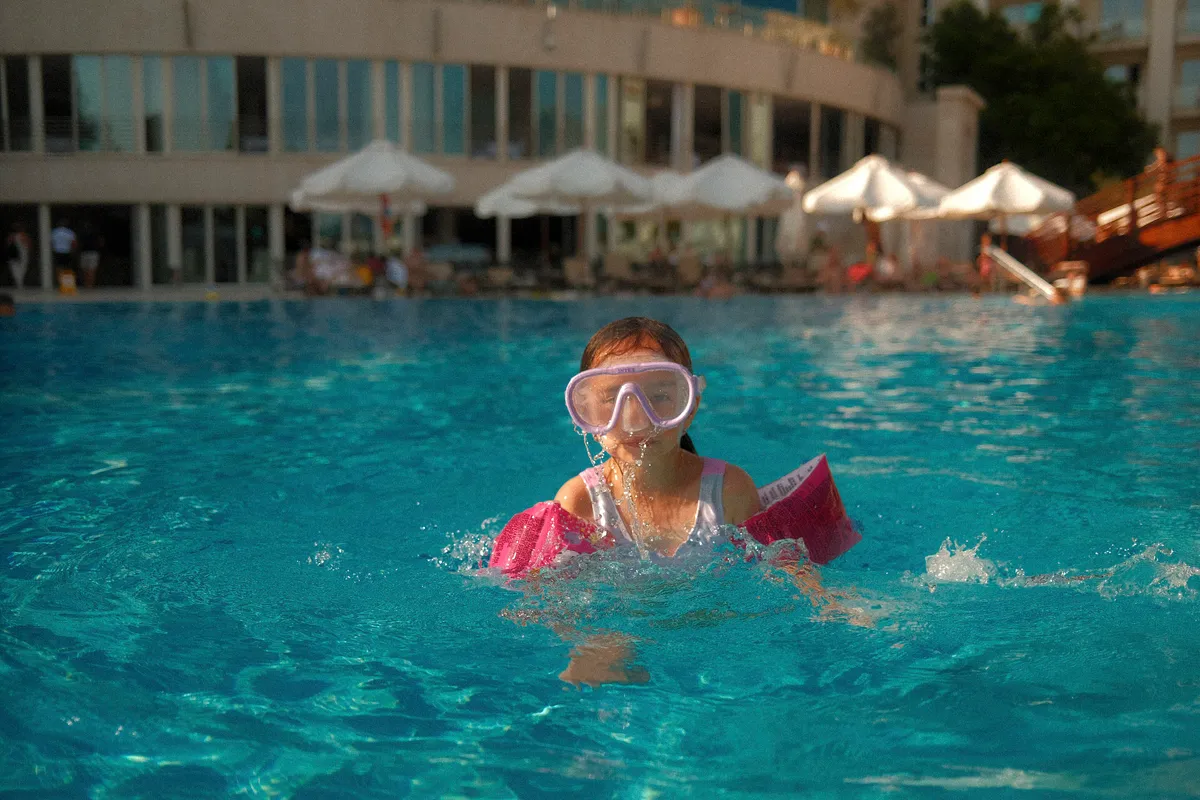
The first-reef formula starts before the boat: mask practice in calm shallow water until it is boring. Photo: Shixart1985, CC BY 2.0 (Wikimedia Commons).
Quick answer The age floors, the swim rule, and the one listing built for a child's first reef
The age floors first: most Key Largo snorkel boats take kids from age 5 - Silent World and the private charter refuse under-5s outright (insurance rules), the 4-hour listing refuses babies under 1, and Sundiver states no minimum but sells child discounts. The swim rule is real: every shared boat requires kids in the water to swim unassisted in deep water - vests and noodles help, but they are not swim ability. The family pick is Sundiver: built for first-timers with pre-swim instruction, one calm reef, rider seats for non-swimming family, and the shortest trip (2.5 h). Confident swimmer kids do brilliantly on the shallow-reef morning or the two-reef tour with the statue; families of 5-6 who want their own pace compare the private charter - the per-person math at six is about $89. The full field sits in the comparison.
Is Key Largo Kid-Friendly for Snorkeling?
Structurally, yes - three properties make the Keys an unusually good children's reef. The water is warm: 84-87°F in summer, mid-70s in the shoulder months; kids who would blue up in an hour elsewhere swim for a full session. The reef is shallow and legible: coral rises to within feet of the surface on the shallow stops, which means a child floats over a visible world - fish, color, architecture - rather than over dark water. The boat infrastructure is used to families: every operator in the comparison handles children daily, crews count heads obsessively, and the review bases are full of first-reef-at-seven stories with happy endings.
The honest counterweight is the swim requirement, and it is worth staring at: these are open-water boats, the reef sits in water too deep to stand in, and the operators are explicit that participants must swim without assistance - jump in, surface, climb a ladder. Vests and swim noodles are included or free on most boats and they genuinely work, but they are assist devices, not a substitute. A child who swims confidently in a pool for 15 minutes at a stretch is ready for the shallow-reef format; a child who is still mastering pool edges needs the shore warm-up below, or a year's patience.
The Age Rules on Every Boat, Listed
The rules differ by listing more than parents expect, and they are the first filter.
| Listing | Minimum age | Non-swimmers | Notes for families |
|---|---|---|---|
| Two-reef tour | 5 (no under-5s aboard) | Ride only, cannot swim | Deepest water of the shared boats; best for confident 8+ |
| Half-day catamaran | None stated; infants on laps | Ride along; vest included | Smallest crowd (32 max), stroller access, towel in fare |
| Shallow reefs morning | 5 (no under-5s aboard) | Ride only, cannot swim | The calm-water format - best shared boat for first deep-water swims |
| Sundiver beginner | None stated; child discounts | Rider seats sold openly | The teaching boat: instruction, one reef, 2.5 h |
| 4-hour two-reef listing | Not suitable under 1 | Ride along | Longest shared day; mangrove backup keeps it kid-proof in wind |
| Private 2.5 h charter | 5 to snorkel | Ride on the boat | Captain personalises depth and pace; camera included |
| Private 4 h charter | None stated; infants on laps | Ride along | Custom day; ask about shade and breaks for young kids |
Which Tour Fits Your Family
Match the boat to the swimmer, not the brochure. A true first reef, or any nerves: Sundiver exists for this - instructors brief every swim, the single reef means no rushed re-boarding, the 2.5-hour clock respects attention spans, and a non-swimming grandparent can ride. A confident swimmer aged 6+: the shallow-reef morning - calm, shallow water, back before lunch, snacks included. A strong swimmer aged 8+ who wants the famous stuff: the two-reef tour - two 45-minute swims and the Christ of the Abyss statue that kids report as the highlight of their year. A mixed or pod-style family of 5-6: run the per-person arithmetic on the private charter (about $89 each at six) - a captain who asks what your kids want to see is a different product from a 40-seat deck. And for families with a stroller-age sibling in tow, Pirates Cove is the smallest shared boat (32 max) and the only listing with stroller access and an explicit service-animal policy - the easiest deck to board with the full family kit.
Two cross-cutting notes. Morning slots matter more with kids: flat water, best visibility, no storm clock, and a nap-friendly afternoon. And the 4-hour listings (GYG trip, AquaLife charter) suit families with older kids who snorkel for the sport of it; under-8s rarely spend four hours well on a boat without a beach break.
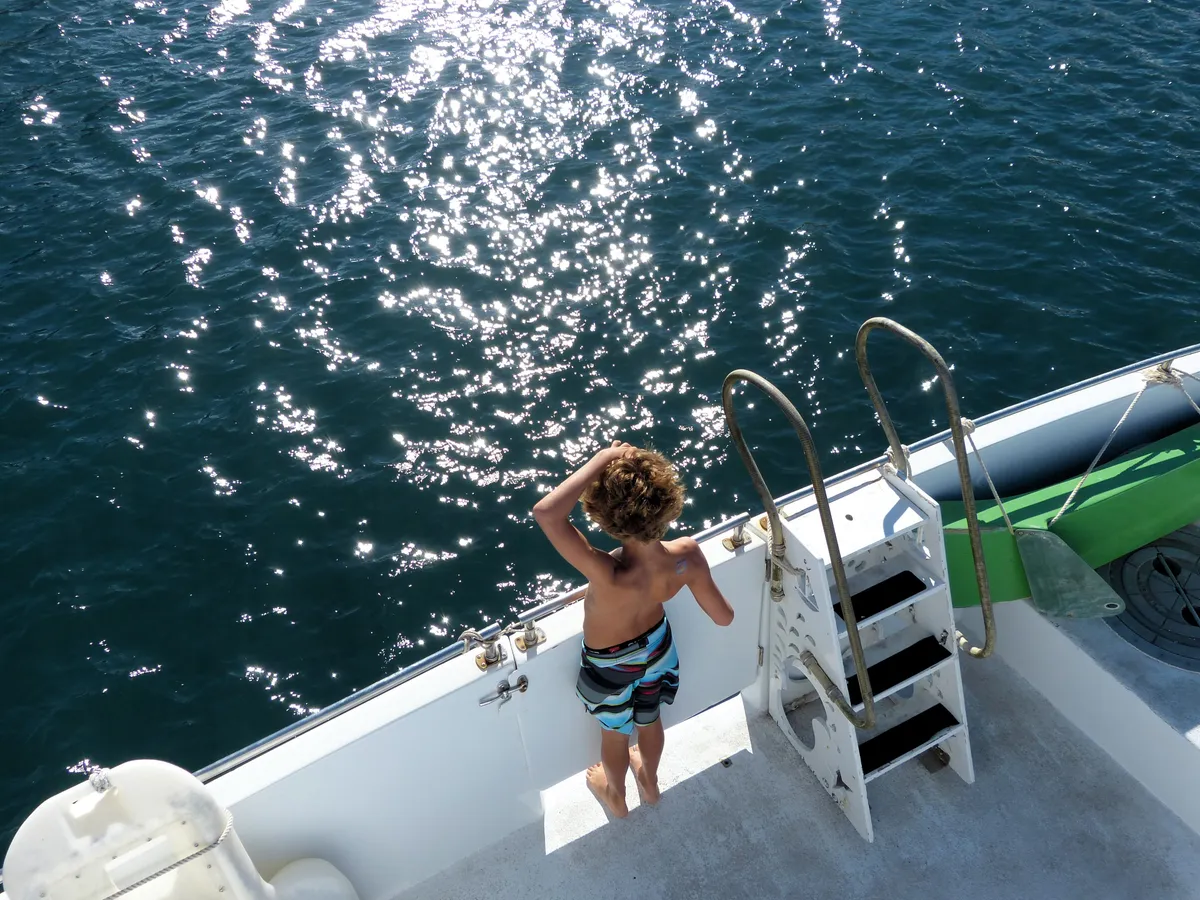
Boarding morning: swimsuits on, gear fitted, and the crew's headcount rituals that make shared boats work for families. Photo: Sue Salisbury, CC BY 3.0 (Wikimedia Commons).
Preparing Kids for the Reef
The single highest-return move costs nothing: pool practice with real gear before the trip. A cheap mask-and-snorkel set in the home pool (or the bath, for the young ones) a week ahead turns the boat day from gear-school into reef-day. Teach two skills specifically - breathing through the snorkel with face down until it is boring, and clearing the mask (lift, tilt, exhale through the nose) - and one rule: fins stay for the water, hands stay off everything alive.
Set the sighting expectations honestly and generously: fish everywhere, maybe a turtle, maybe a ray, maybe a nurse shark - which is a good shark, sleeps in the day, and eats nothing it cannot fit in its mouth. Kids who board hunting for Nemo report finding him; kids who board hunting for sharks sometimes settle for barracuda, which is also a win if framed as one. And brief the boat rules in kid-terms the night before: the crew counts heads (let them count you), the ladder is one-at-a-time, and the captain's word is the water's law. Reviews across the listings say the same thing in different words: the crews are genuinely good with children - the parents who prepared theirs are the ones whose reviews mention naps.
Safety: The Non-Negotiables
The swim test is the gate: no shared boat here takes a non-swimming child into the water, whatever the brochures of memory suggest. If your child cannot swim 15 minutes unassisted, they ride - several listings sell rider seats openly - or you do the shore option. Flotation is included and should be used: snorkel vests on every boat (Pirates Cove includes them in the fare), swim noodles on the private charter; a child in a vest and a noodle with a parent within arm's reach is the standard family unit on these reefs. Sun is the day's real hazard: rash guards beat lotion (no re-application arguments), reef-safe sunscreen on every exposed inch, and hats that survive wind. Motion sickness hits kids hardest on the ride out - light breakfast, tablet if the pediatrician agrees, mid-boat seating, horizon-watching games. The ladder rule deserves its mention: one at a time, crew-assisted, no swimming under the platform - the boats run it strictly and so should you.
One sanctuary rule doubles as a safety one: nothing living gets touched - coral cuts are the reef's most common injury, and the no-touch rule is how the crews keep it rare. The full what-to-bring list covers the kit side of all of this.
The Shore Warm-Up at Pennekamp
Before any boat day, or instead of one for the youngest, Cannon Beach at John Pennekamp Coral Reef State Park is the free-ish training ground: the park's $8-per-vehicle entrance buys a protected, shallow, sandy cove with seagrass beds, rock patches and the kind of small brave fish that make a five-year-old's morning. The snorkeling is genuinely modest - this is warm-up water, not the reef - but it does the three jobs that make a boat day work later: mask confidence, kick practice, and the discovery that fish are not scary. The park rents gear on site if the suitcase skipped it, and the visitor center's 30,000-gallon aquarium doubles as a rainy-day reef preview that shows kids exactly what they are swimming toward.
The honest limit of shore snorkeling in Key Largo is the point of this site: the living reef is six to seven miles offshore, and no beach reaches it. Cannon Beach is the practice field; the comparison listings are the game. Current entrance fees are published on the park's official page.
The Non-Swimmer Sibling Problem
The most common family shape at a Key Largo dock is the asymmetric one: a confident 9-year-old, a cautious 6-year-old, and a 3-year-old who cannot board most boats at all. The honest options, in order of honesty. Split the day: one parent takes the swimmer on the shallow morning while the other does Pennekamp's beach and aquarium with the littles - the park's 30,000-gallon aquarium is a genuine reef preview for a child too small for the real one. Rider seats: Sundiver sells them openly, most shared boats accept ride-alongs, and a deck-seat sibling with a fish-identification card is a happy sibling on the right crew. The private charter bends furthest - the 2.5-hour Snorkel the Keys trip takes a non-swimming family member on the boat and shapes the swim around the confident child - but the under-5 floor applies there too.
What does not work, per the operators' own printed rules: hoping a vest changes an age floor (the under-5 bans are insurance rules, enforced at the dock), or sending a non-swimming child into open water on flotation alone. The water-entry rule is swim-unassisted, everywhere, and the trip is better planned around it than argued with at the platform.
After the Trip: Keeping the Spark
The first reef day is either the start of something or a story that fades by the drive home, and the difference is what happens in the 48 hours after. Same-day: the docks and parks make it easy - the Pennekamp visitor center's aquarium lets a child point at the fish they saw, which is the single best consolidation exercise in the Keys; the freshwater showers at the Garden Cove property make the drive home warm; and the crew's fish cards (the private captains hand them out unprompted) turn the evening into a species checklist. Next-day: the shore warm-up at Cannon Beach reads completely differently after a boat day - the child who floated over real coral yesterday now leads the expedition into the seagrass, and the confidence compounds. At home: the photos - the private listing's same-day photo link, the waterproof camera's haul - do more recruiting than any souvenir, and the species list that started on a boat deck becomes a backyard-pool practice agenda for next year's trip.
Parents planning a Keys vacation around one good reef morning should book that morning mid-trip: after a beach warm-up day, before a buffer day - the sequence the review sections' best family trips all seem to follow.
Bad-Weather and Bad-Luck Backups
Every Key Largo family trip eventually meets a windy day, and the backup plan is worth packing with the sunscreen. Move, don't cancel: every listing here carries free cancellation to 24 hours - the family that booked Monday 8:15 AM for a Wednesday-front week simply moves to Thursday morning; the operators' crews text forecasts ahead and reschedule callers, sometimes across operators. The mangrove fallback is built into one listing - the 4-hour two-reef listing converts rough-ocean days into sheltered mangrove snorkeling, which children tend to rate higher than adults expect. The dry reef day: the Pennekamp aquarium, the environmental center at Dagny Johnson Key Largo Hammock, and the theater at the visitor center hold a child's attention on a 20-knot Tuesday without pretending it is the reef. The pool day is not a defeat either: the condo pool with the travel mask is where next year's trip gets its training reps.
The meta-rule from the review sections: families that treat weather as logistics - move the slot, take the backup, keep the mood - end up with the five-star memories anyway. The reef is not going anywhere; the vacation is.
What the Crews Wish Parents Knew
Read across the listings compared here' review replies and operator notes, and the same five wishes recur - a parent's cheat sheet written from the crew side. Tell us the truth at check-in: the first-timer, the nervous swimmer, the child who panicked last summer - crews plan around what they know and rescue what they don't. Let us count: the headcounts are the trip's safety spine; a parent who answers for the missing child at the far rail is the crew's favourite passenger. Trust the vest: it fits high and snug for a reason, and the child who wears it properly outlasts the one who loosened it at the dock. Warn us about the stomach, not the behaviour: seasick kids act out before they look pale - the tablet at breakfast is a kindness to everyone. Come back in the afternoon we suggested: morning water is calmer, and the crews would rather hand you a great first trip than a survivable one. None of it is complicated; all of it is the difference between the trip that ends at the dock and the one that ends with a child planning the next one.
A Family Reef Day, Sequenced
One worked schedule, from the review sections' best family trips. T-minus-2 days: book the morning slot (Sundiver for a first reef, the shallow morning for confident swimmers), start the pool practice, watch one honest snorkeling video together. T-minus-1 evening: waivers signed, bag packed by the what-to-bring list - swimsuits laid out, tablets next to the cereal boxes. T-day, 6:45 AM: light breakfast, tablet with breakfast, sunscreen before clothes. 7:45: arrive at the dock with margin; let the kids watch the boats load while you check in - anticipation is half the product. 8:30-9:00: boarding, fitting, the brief; the crew learns your kids' names. 9:15-10:30: the water - buddy pairs, vest checks, one parent at arm's reach per swimmer. 10:30: back aboard, chips or the cooler you packed, the crew's fish quiz, the nap risk rising. 11:15: dock, showers, and Gus's Grille or the crew's recommendation. Afternoon: pool or beach, photos on the TV, and the species list started on a napkin. The rule underneath all of it: one reef morning per Keys day - the families who double-book the afternoon after the morning swim are the ones whose reviews end at 'exhausted.'
Kids-on-the-Reef Questions
At what age can kids go snorkeling in Key Largo?
Most shared boats take snorkelers from age 5 - Silent World and the private charter bar under-5s outright as an insurance rule, and the 4-hour listing refuses babies under 1. Sundiver states no minimum and sells child discounts, but the governing rule at every age is the same: your child must swim unassisted to enter the water.
Is snorkeling safe for a 6-year-old?
On the right format, yes: a swimming-confident 6-year-old in a vest, noodle, parent within arm's reach, on a calm-morning shallow-reef trip is the standard happy case in these listings' reviews. Choose the calm formats - the shallow morning or Sundiver - take the first slot, and skip the open-water two-reef circuit until the swimming is boringly solid.
Where can I snorkel with kids in the Florida Keys for free?
Cannon Beach inside John Pennekamp Coral Reef State Park - shallow, protected, sandy, with the park's per-vehicle entrance the only cost. It is warm-up snorkeling that builds mask confidence before a boat day, and the park's aquarium gives non-swimmers their reef too.
Can my non-swimming child come on a snorkel boat?
As a rider, usually yes - Sundiver sells rider seats openly, most boats allow ride-alongs, and the deck views are good. But no shared boat here allows a non-swimmer into the water; flotation devices assist swimmers, they do not replace swimming. The private charters can shape a day around a rider too, on the same water-entry rule.
Which Key Largo boat is best for a child's first snorkel?
Sundiver is the one built for it: pre-swim instruction from the crew, one calm reef with an unhurried hour, a 2.5-hour clock, child pricing and a rider option. Once the first reef is a memory, the shallow-reef morning and then the two-reef statue trip are the natural progression.
Do kids get bored on the boat ride out?
Rarely, if the ride is short and briefed: the reef run is 20-30 minutes, and crews narrate it - boats, birds, the occasional dolphin escort. Pack the distraction hedge anyway: a snack, the fish-identification card, and a seat with a view. The morning departures have the calmest rides, which is the real boredom prevention. Bring the snack and the card - the combo is undefeated.